
Entertaining with Tea: Pairings and Simple Ways to Cook with It
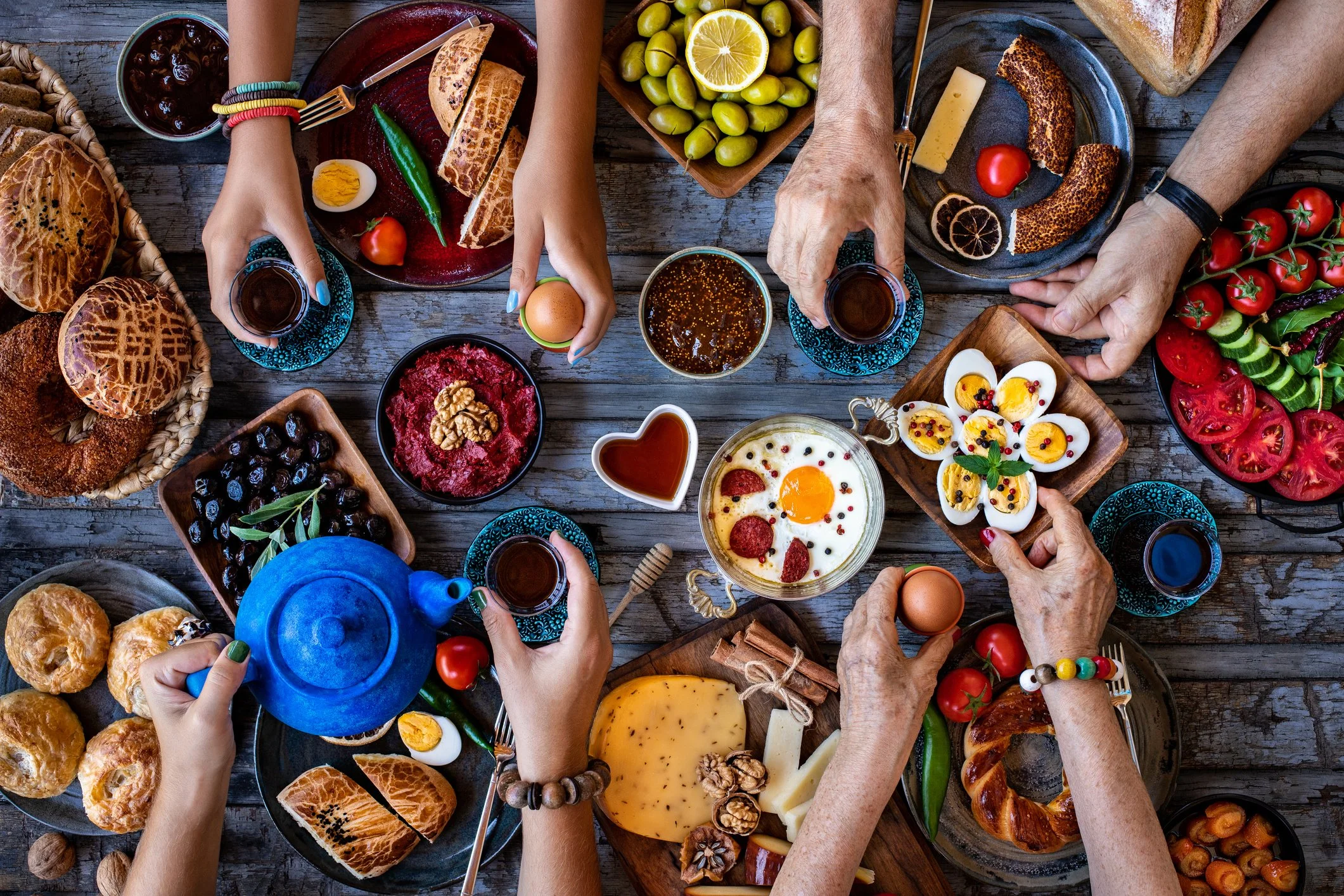
When you're planning a dinner, a brunch, or an afternoon with friends, the drinks usually come down to wine, coffee, or something sparkling. Tea is worth a place on that list too. It gives everyone at the table something to sip and talk about, and it's a real option for guests who aren't drinking — whether they're skipping alcohol that evening, cutting back on caffeine, or just want something other than another glass of water.
Tea isn’t just for dessert or fancy tea parties, either. Iced or cold brew tea is great for summer barbecues; hot or iced tea can be paired with a cheese board for a casual get-together. In fact, nearly any dish can be paired with a suitable tea, whether you’re having a romantic dinner for two or hosting the family’s Thanksgiving or Holiday dinner.
It's also a nice way to do something a little different. Most people have had tea, but far fewer have had it paired thoughtfully with a meal or worked into the food itself. Both are easier than they sound. Here are a few ideas to get you started.
A few tips for pairing tea with food
There are no strict rules here, only guidelines — personal taste always has the final say. But a few principles from tea and food pairing make it much easier to land on a good match.
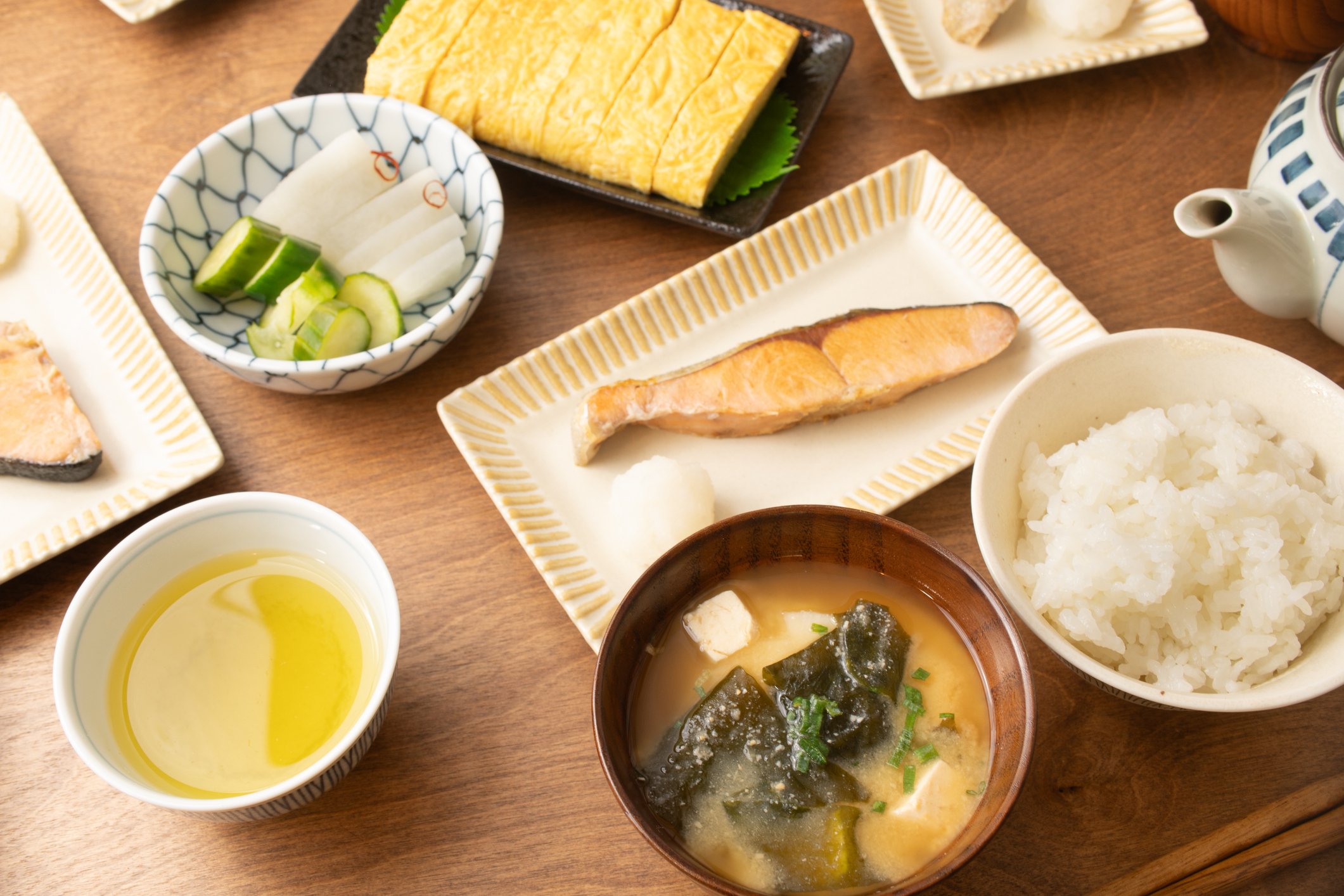
A grassy green tea like Sencha or Genmaicha pairs perfectly with Japanese cuisine
Match the weight of the tea to the weight of the food. Delicate foods go with delicate teas, and richer foods can stand up to fuller, stronger teas. A light white fish or a plate of fresh fruit pairs well with a subtle green or white tea, while a heartier dish like roasted meat or a rich dessert calls for a fuller-bodied black tea. If one clearly overpowers the other, adjust until they feel evenly matched.
Work from light to strong across the meal. Just as you might with wine, start with the more delicate teas and build toward the stronger, fuller ones as the food gets richer. That progression keeps each pairing tasting distinct rather than blurring together.
Match flavors, or set up a contrast. You can fine-tune a pairing by echoing a flavor that's in both the tea and the food — a citrusy tea alongside a citrus dessert, for example. Or you can go the other way and use contrast: a brighter tea against a rich, savory dish to cut through it. Salty foods, in particular, tend to soften a brisk tea (think Ceylon black tea) and bring out its sweetness, which makes them an easy, reliable match.
A few concrete starting points, drawn from classic pairings:
Cheese board:
A light black tea like Peach Orchard or a light oolong (like our Monkey-Picked Oolong) with brie or a mild cheese.
Alternatively, a grassy green tea for brie or other mild soft cheeses. Both Japanese Sencha and Jasmine Pearls go particularly nicely with brie. For an aged brie, which is more pungent and earthy, opt for a stronger tea with a robust flavor like Garden Street (Chinese green tea with lemon verbena) or a ripe Pu-Er.
A bolder, smokier tea, such as a classic Lapsang Souchong with a blue cheese or smoked gouda.
A dark oolong with stronger cheeses, like cheddar.
For a caffeine-free option, try a light blend like Lavender Fields or even plain chamomile tea with mild cheeses. Hibiscus blends, like Sunrise on the Hudson or Madison Rose Garden pair well with something tangy, such as goat cheese.
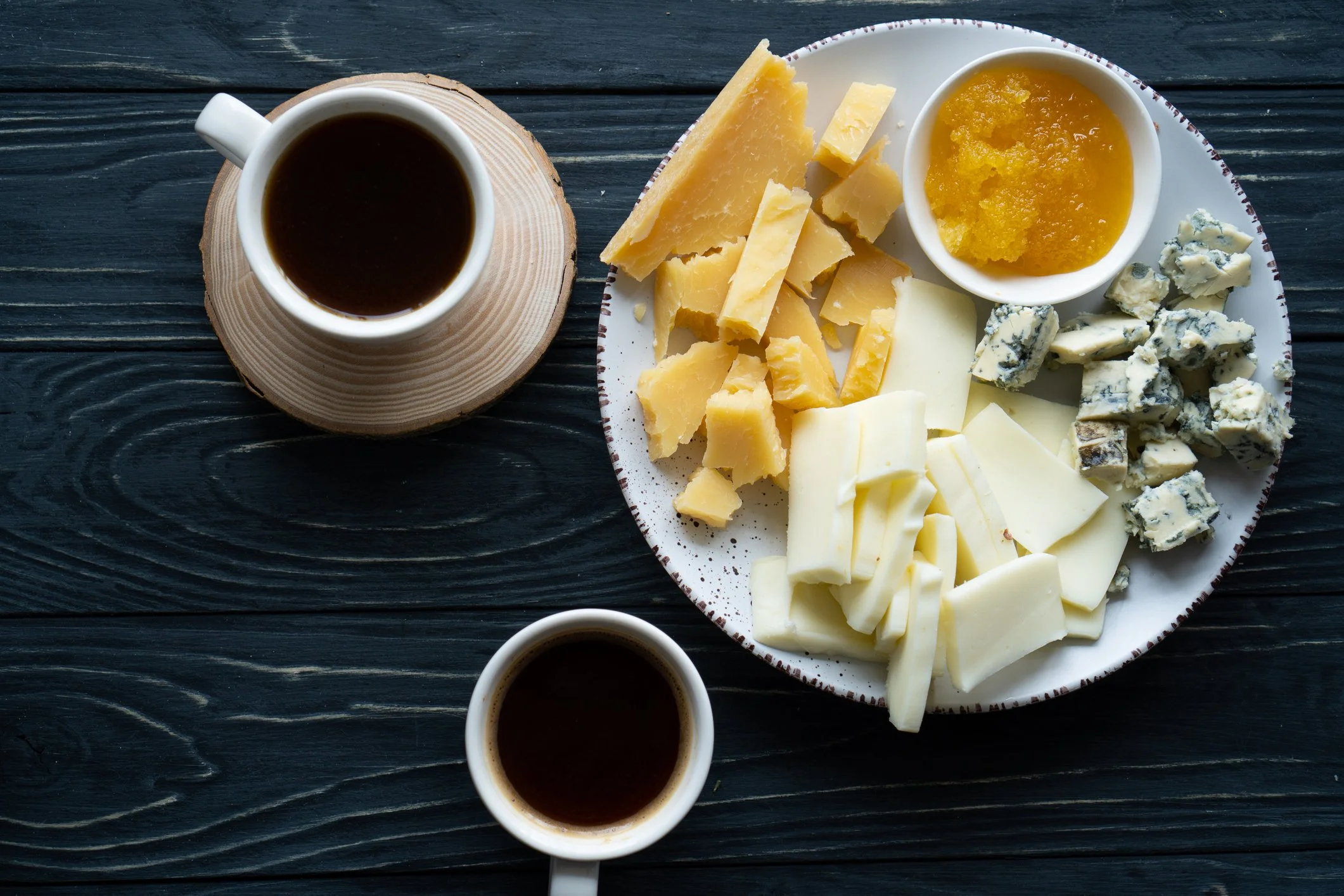
A smoked black tea like Lapsang Souchong can be paired with strong cheeses, liked aged cheddar or blue cheese
Something sweet:
A citrus-forward black tea like Liberty Grey with custard or a fruit dessert.
A robust black tea like Nepali Gold, Hoboken Breakfast, or any strong black tea you prefer with anything chocolate.
You can also opt for a caffeine-free pairing with a mint tea, such as Jersey Fresh Mint or Summer at the Shore. These will pair well with a wide variety of desserts, from chocolates to cheesecake or lemon bars.
A savory main:
A full-bodied black tea or dark oolong, like Formosa Oolong, with roasted meats.
A fresh green tea like our Heirloom Green Tea, Japanese Sencha, or Green Kukicha with delicate fish or seafood.
Genmaicha or Hojicha with seafood or any Japanese cuisine. Hojicha can stand up to slightly heavier foods, and has naturally lower levels of caffeine than most green tea.
A ripe Pu-Er or robust white tea (like our Spring White) with rich/fatty dishes or food that has a bit of spice.
For a caffeine-free pairing, try a spiced blend like our Mile Square Spice with a poultry, fish, or tofu dish, or a hibiscus blend like Sunrise on the Hudson for heavier fare, such as roast beef or steak.
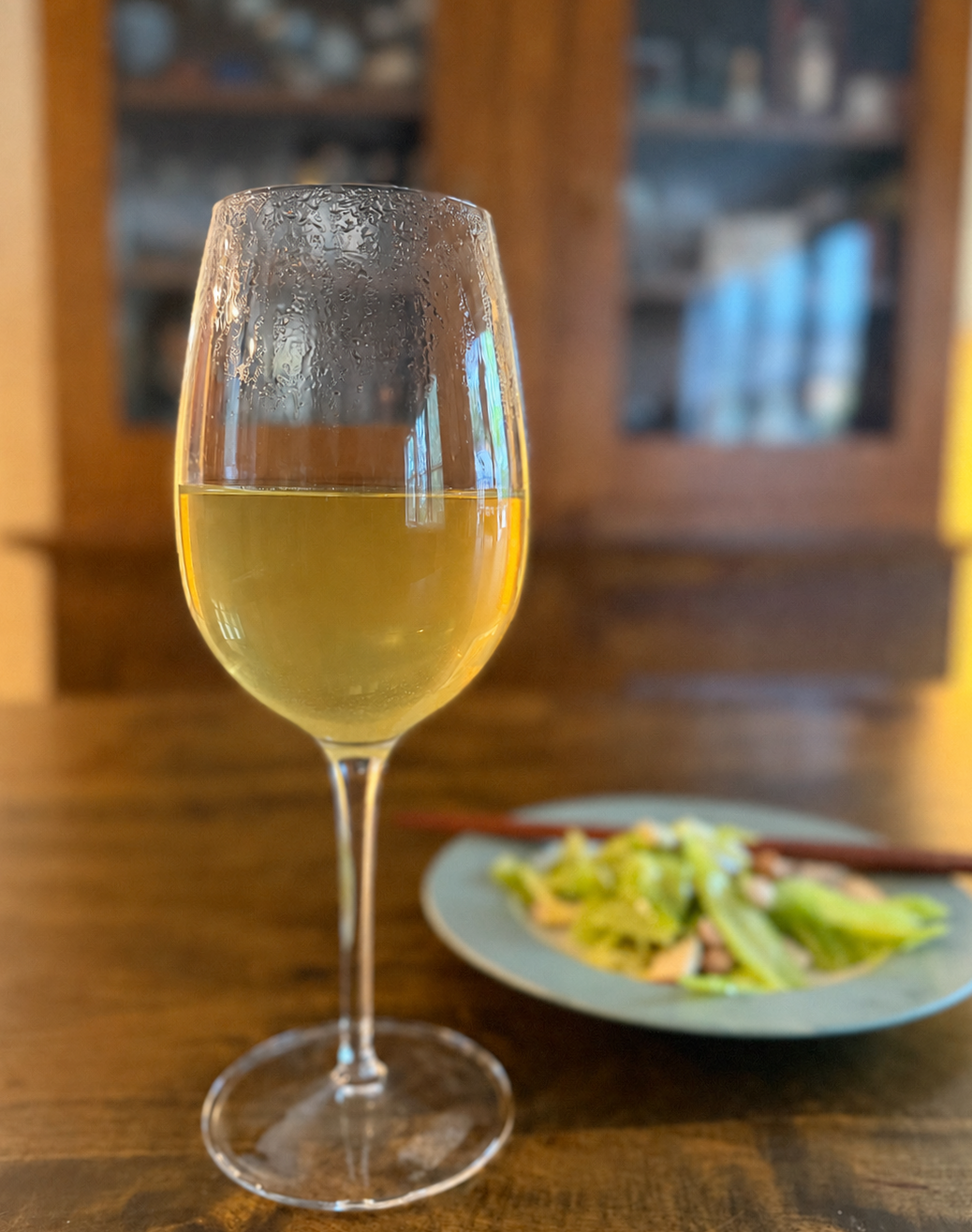
Dress it up
You can even serve the tea in wine glasses for a more elevated vibe.
When in doubt, you can usually find an oolong tea that works with any dish. Just match the intensity: light oolongs (the type that brews a shade of green) with light dishes, and dark oolongs with heavier dishes.
Preparing the tea
There are different methods for preparing tea for a group depending on the size of the gathering and the number of teas you want to serve. For a simple afternoon tea gathering of 2 - 4 people, you can easily serve the tea from a small teapot or brew individual cups using a single-cup infuser basket, or even a fillable tea bag. Just be sure you can easily dispose of the used leaves when the tea is finished steeping so that it doesn’t become bitter.
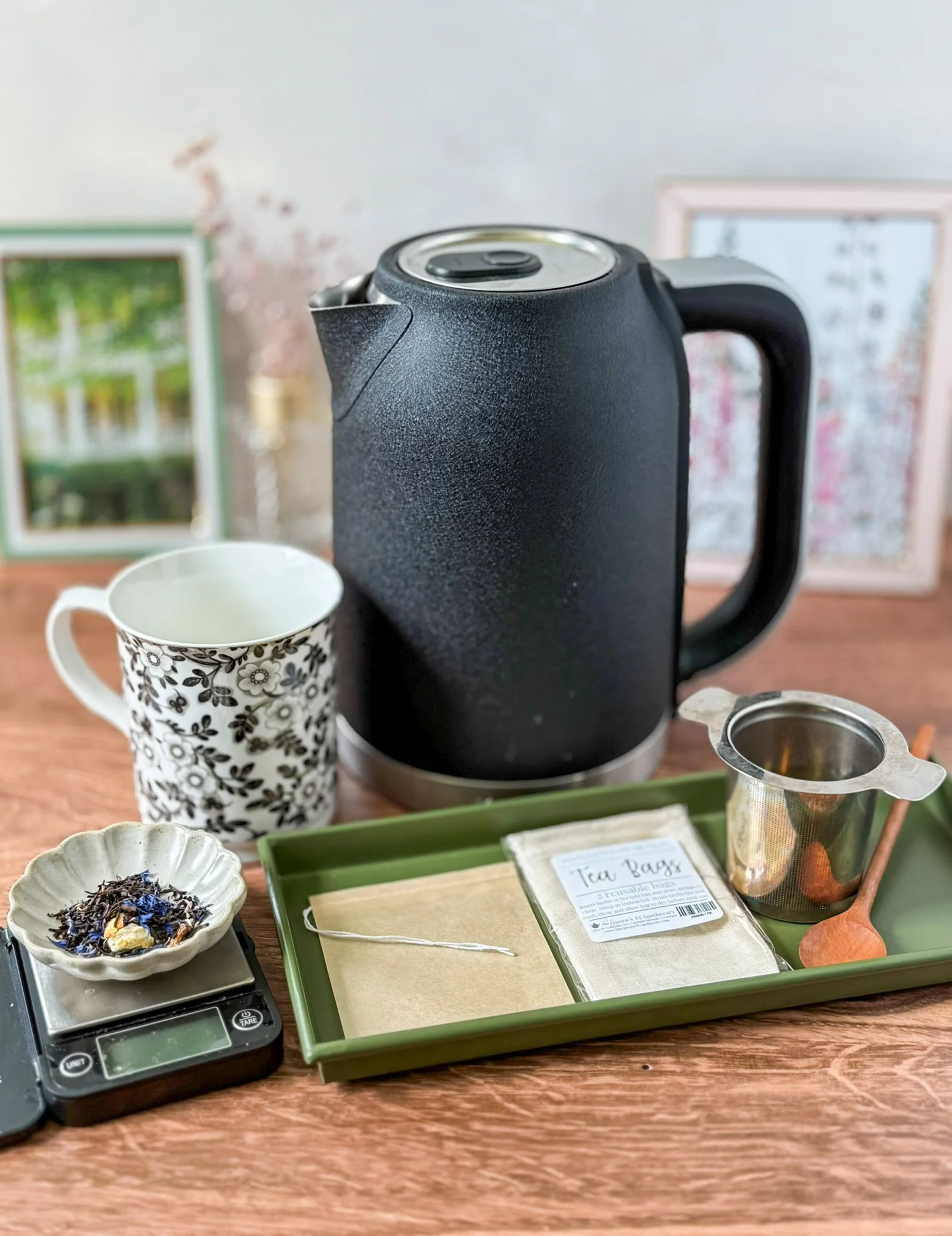
Keep it simple
An electric kettle and some simple tea brewing accessories are all you need to get started.
For a larger group, or a more complex menu with a different tea paired to each course, you may want to invest in a few small teapots with built-in strainers. You can prep the dry tea in the pot for each of the different teas and only add the hot water right before you’re ready to serve.
Alternatively, you could consider buying a few small insulated thermal carafes. You can easily find these by searching “insulated carafe” or “thermal coffee carafe” on Amazon or other online marketplaces. Using carafes would allow you to prepare the hot teas in advance and keep them to the correct temperature until you’re ready to serve. (Pro-tip for using insulated carafes for tea: prime each one with boiling water for up to an hour and then replace the water with tea. This will help it maintain temperature more effectively).
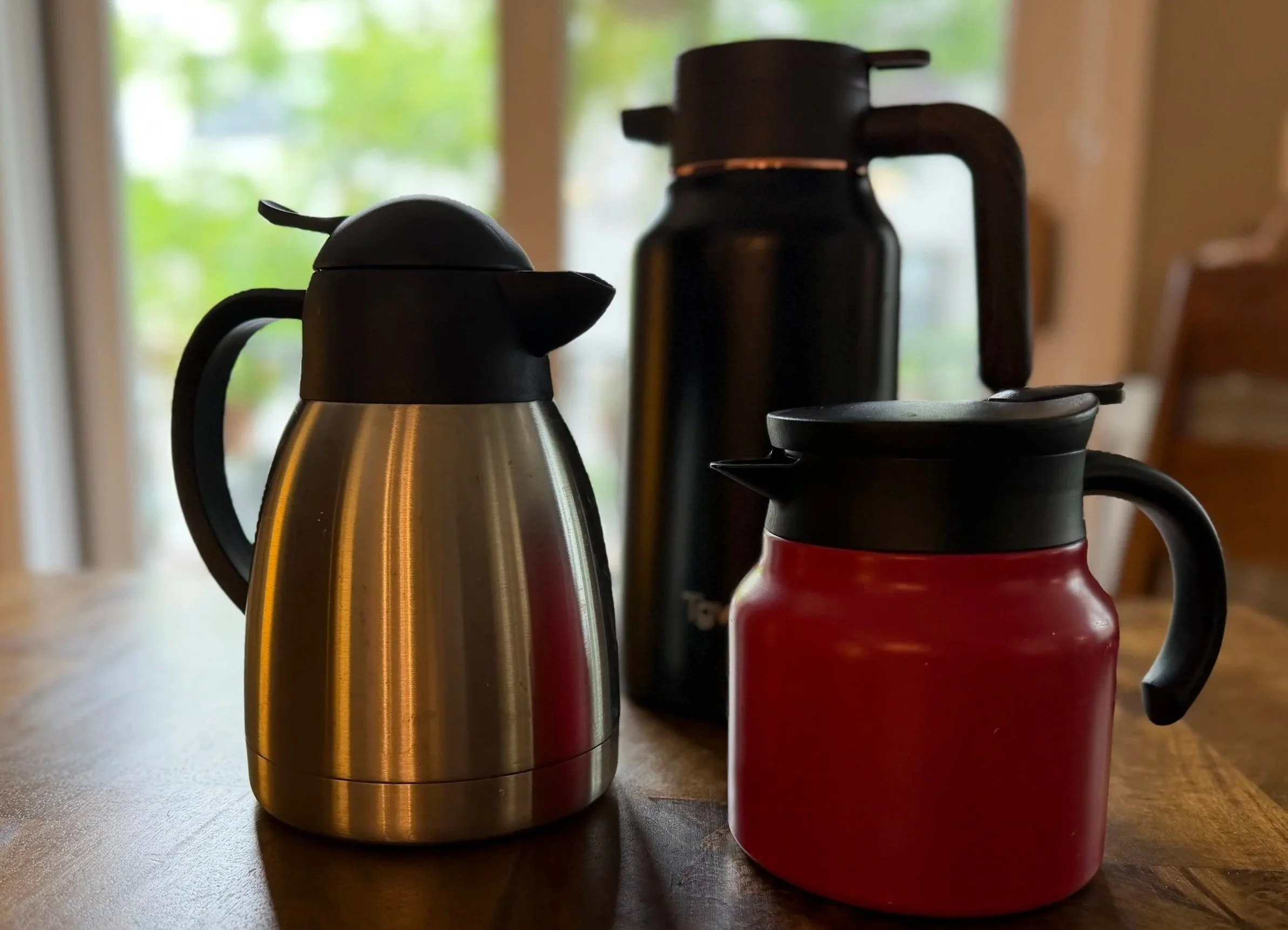
Insulated carafes come in many different sizes and styles and make it easy to keep tea or water hot.
In either case, you will want to have an electric kettle to quickly heat the water. You can also keep the hot water in a large insulated carafe so that you don’t need to reheat it for each steeping. For more beginner-friendly tea brewing tips, check out this post.
A couple of ideas for cooking with tea
Tea isn't only for the cup. Used as an ingredient, it adds flavor to a dish the way an herb or spice would. The main thing to keep in mind is to draw out the flavor of the leaves without pulling out bitterness — which mostly means keeping the leaves away from direct, intense heat.
Steep it into a liquid or a fat. This is the gentlest and most forgiving approach. You can steep tea leaves into warm cream or milk for a custard, ice cream, or whipped topping; into a simple syrup for drizzling over cake or stirring into a mocktail; or into a stock for soups and sauces. A good trick for savory dishes is to tie the leaves in a small sachet, drop it into the simmering liquid, and lift it out once the flavor is where you want it — the same way you'd pull a bay leaf. Because fat and a little acidity both carry tea's flavor well, dishes built on cream, butter, or a splash of citrus tend to show it off nicely.
Use it as a rub or a marinade. Ground tea, on its own or blended with complementary spices, can season meat, poultry, or fish. If you're grilling or using high heat, work the tea into a wet marinade rather than a dry rub so the leaves don't scorch. This is an easy way to add a subtle, savory depth that guests usually can't quite place. For a strong, smoky flavor that goes well with grilled meats or spicy dishes, try a smoked tea like Lapsang Souchong.
Bringing it to the table

You don't need special equipment or a formal tea service to make any of this work — a pot, some good loose leaf, and a little curiosity are enough. I’ve included a few tips above to make it easier to prep the tea for service, but if you don’t have several teapots or insulated carafes, don’t worry – as long as you have a way to heat water and some way to strain the leaves, you’ll be fine. Offer a pot alongside the meal, or build one dish around tea and let it be the thing people ask about. Either way, it's a simple way to give everyone at the table something to enjoy, including the guests who aren't reaching for a glass of wine.
More ideas & recipes
The Tea & Herbal Association of Canada keeps an extensive list of great tea recipes, both for food and for tea-infused cocktails and mocktails. Explore all of their recipes here.
Try our Tea Discovery Sampler to explore a variety of teas (including herbal blends) for your next gathering. Want something more tailored to your menu? Reach out to me at brooke@hobokentea.com and I would be happy to help point you in the right direction.