
Cold Brew vs. Iced Tea: What’s the Difference (and Which Should You Make?)
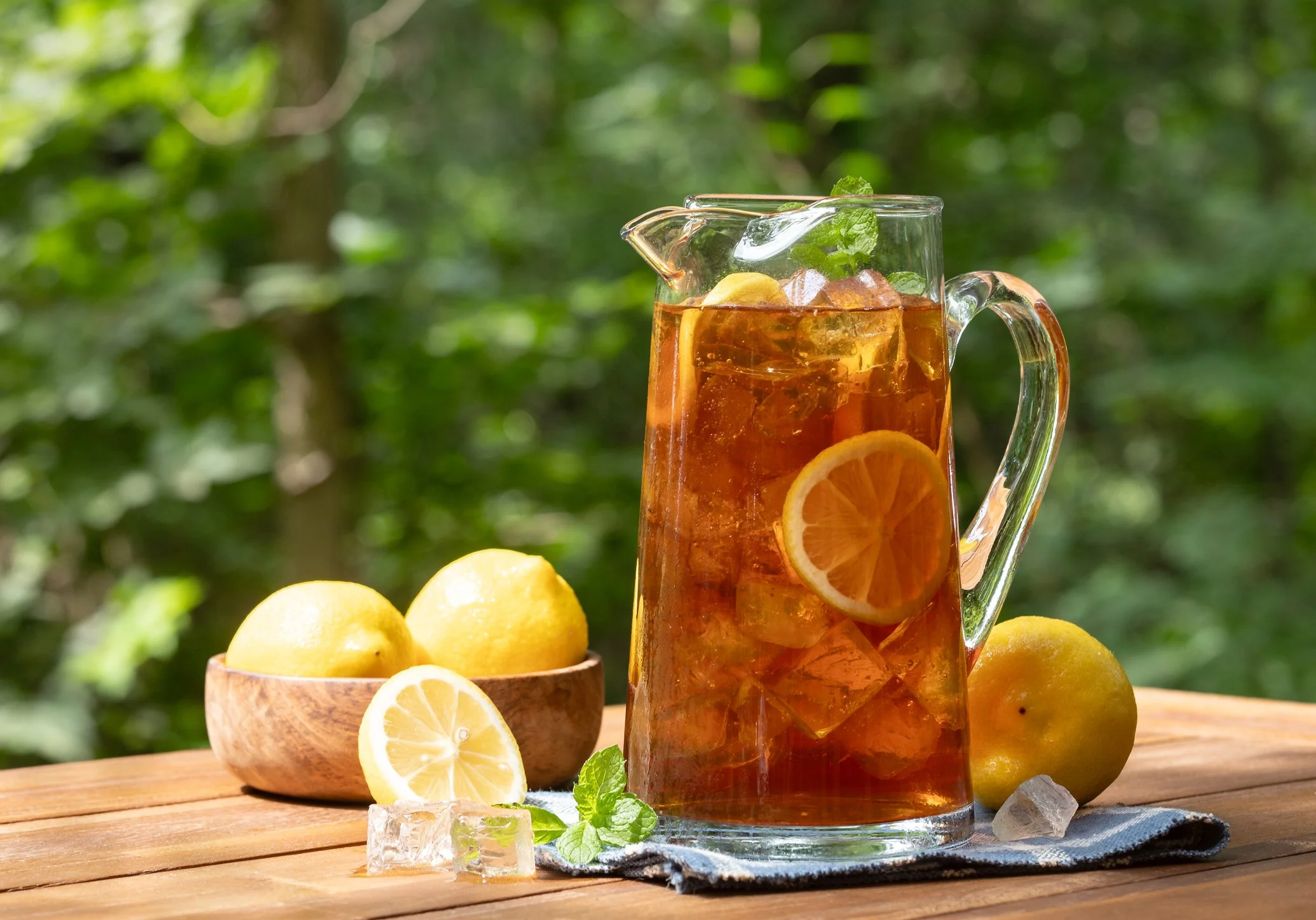
The great thing about tea is it can be served hot or cold and still taste delicious. But you may not realize there’s more than one way to prepare cold tea - and the method you use greatly impacts its taste.
I’ve recently been serving both iced tea and cold brews at my booth when I do vendor markets. Unfortunately, most people walking by have no idea what I mean by “cold brew tea” (and honestly most of them think I’m selling cold brew coffee…and then they are very disappointed!)
I could make it easier on myself by simply writing “Iced Tea” on all the signs. But that just feel wrong. There really is a difference!
Iced Tea
This is the type of cold tea that most people are familiar with. To make iced tea, all you have to do is take your hot tea and pour it over ice or chill it in the refrigerator. Super easy!
I usually recommend brewing your tea a bit stronger by using a higher tea-to-water ratio so that it doesn’t get too diluted when you add ice. If you’d like a deeper dive into how to make iced tea with loose leaf tea, check out this blog post.
Cold Brew
Yes — you can brew tea in cold water. Making cold brew tea is just as easy as making iced tea, but it takes more time. Simply put your tea in a jar or pitcher, add cold water, and set it in the fridge overnight. In the morning, you’ll wake up to delicious, perfectly-brewed and chilled tea.
Equally good, but not the same
Whether you infuse your tea with hot or cold water, you will end up with a delicious drink as long as you start with good-quality ingredients. But each will have a different flavor profile. Why is that? In a word: chemistry.
Tea leaves are packed with chemical compounds - flavonoids, catechins, caffeine, and tannins, to name a few - that give it its characteristic aroma and flavor. Water temperature plays an important role in determining how efficiently each compound is extracted from the leaf. The same concept applies to herbal teas that are made from flowers, leaves, fruits, and/or seeds.
For true tea (Camellia sinensis), cold infusion will tend to bring out floral and fruit notes more strongly, while reducing the tea’s bitterness and astringency. This is in large part due to the fact that caffeine, a bitter compound, is extracted much less efficiently at cold temperatures. So cold brew tea will not only have a different flavor from hot-brewed iced tea, it will also be lower in caffeine.
With herbal blends, it’s really a matter of trial and error to see which method produces a result that you like. For example, I’ve found that Sunrise on the Hudson works better as an iced tea for most people. When it’s brewed cold, the ginger comes out very strongly. That’s great if you love ginger, but for many people it can be too intense.
Ready to try it out?
Here are some of my favorite iced and cold-brew teas. I’m always interested in how other people take their tea, so if you have a favorite recipe of your own, be sure to leave it in the comments!
Hoboken Breakfast
When brewed cold, Hoboken Breakfast is mild and smooth. The cold infusion enhances the natural sweetness of the blend as well as its malty notes.
How to make it: Use 8 - 10 grams of tea (or 2 - 3 tablespoons) for every quart of filtered water. Place in the fridge at least 6 hours or overnight. Strain and enjoy chilled.
White Peony
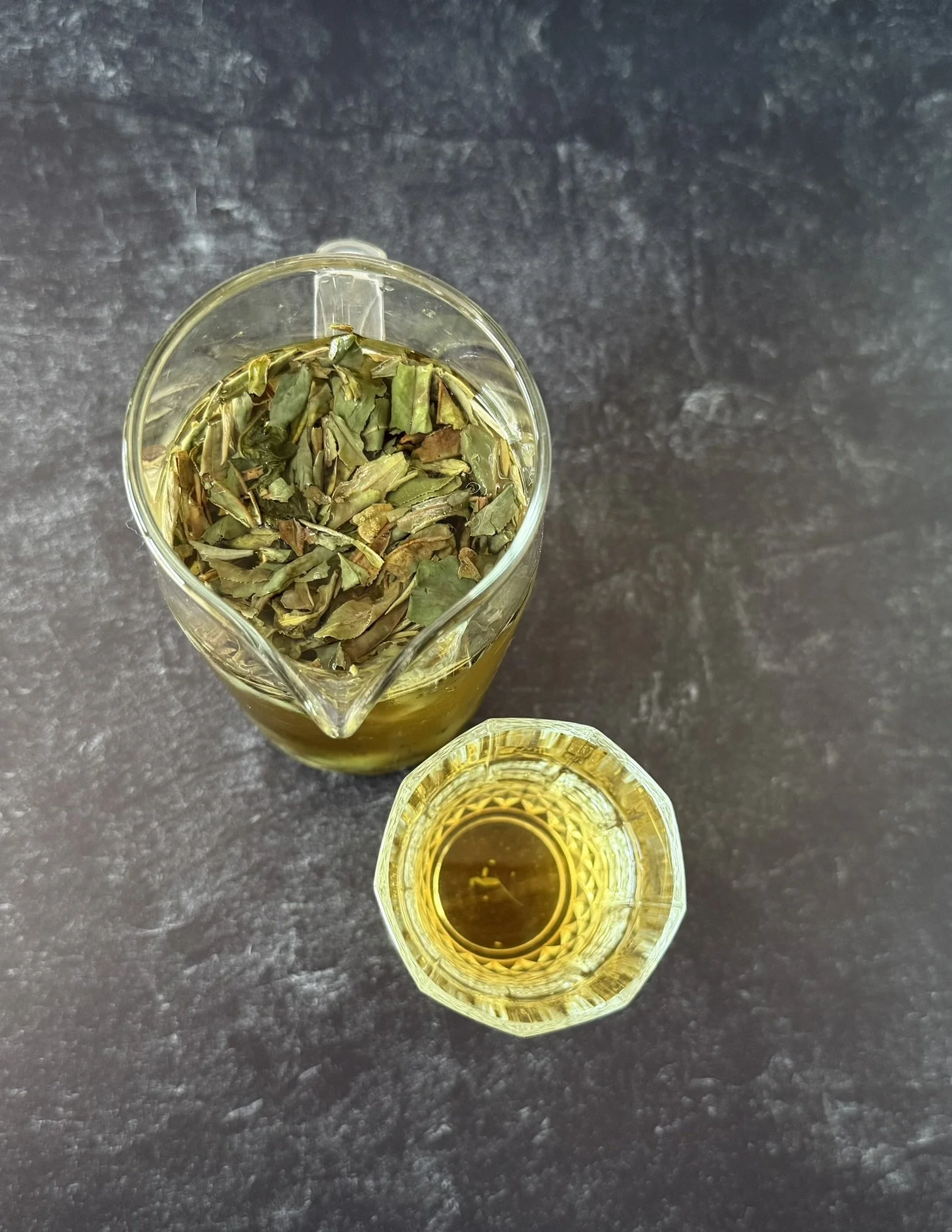
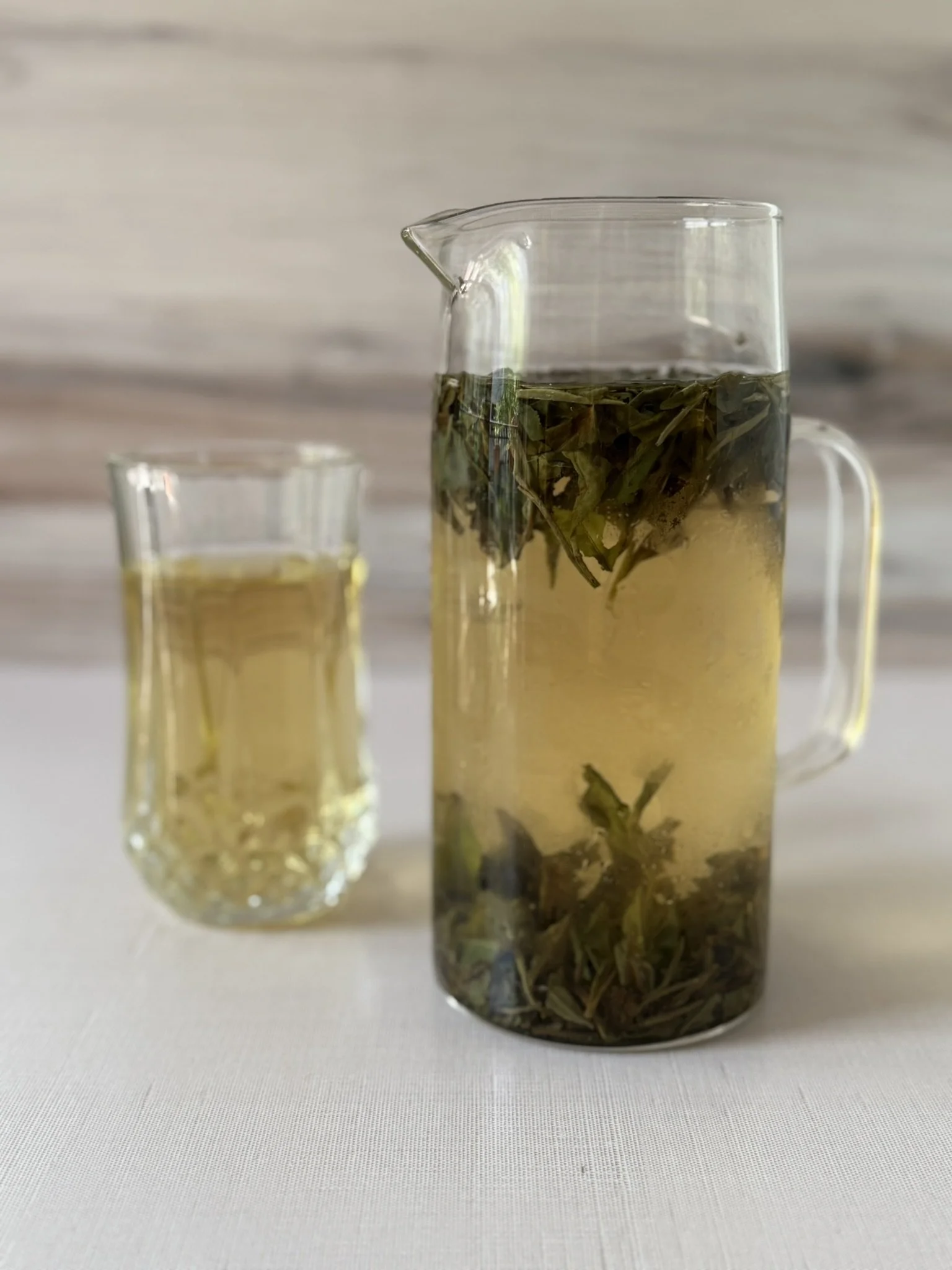
When brewing White Peony as a hot tea, it’s easy to make it too intense, and people do sometimes complain that it’s bitter. But cold brew is a different story: let it steep in the fridge overnight or for multiple days, you can’t mess it up. Cold infusion brings out the stone fruit flavors of this tea really well.
How to make it: Use 6 - 8 grams (or about a quarter cup) of tea for every quart of filtered water. Chill 6 hours or overnight. Don’t strain the leaves out; when about half is gone, top up the water to make more. This can be repeated 2 or 3 times.
Sunrise on the Hudson
Iced Sunrise is a customer favorite on market days. It’s bright, refreshing, and flavorful without any added sweeteners.

How to make it: Use 6 - 10 grams (about 1.5 to 3 tablespoons) of tea per quart, depending on how strong you like the flavor (I use 10 grams). Pour boiling water over the tea and let steep at least 5 minutes (up to 10). Pour over ice and enjoy!
Dragon Well
Cold brewing really brings out the nutty, smoky flavors that define this tea.
How to make it: Use 5-6 grams (~2.5 to 3 teaspoons) of tea for every quart of filtered water. Chill at least 8 hours or overnight. Strain and enjoy, or keep the leaves in to make a second batch. I personally like to let it come up closer to room temperature first before drinking, which makes the flavors more noticeable.
Lavender Fields
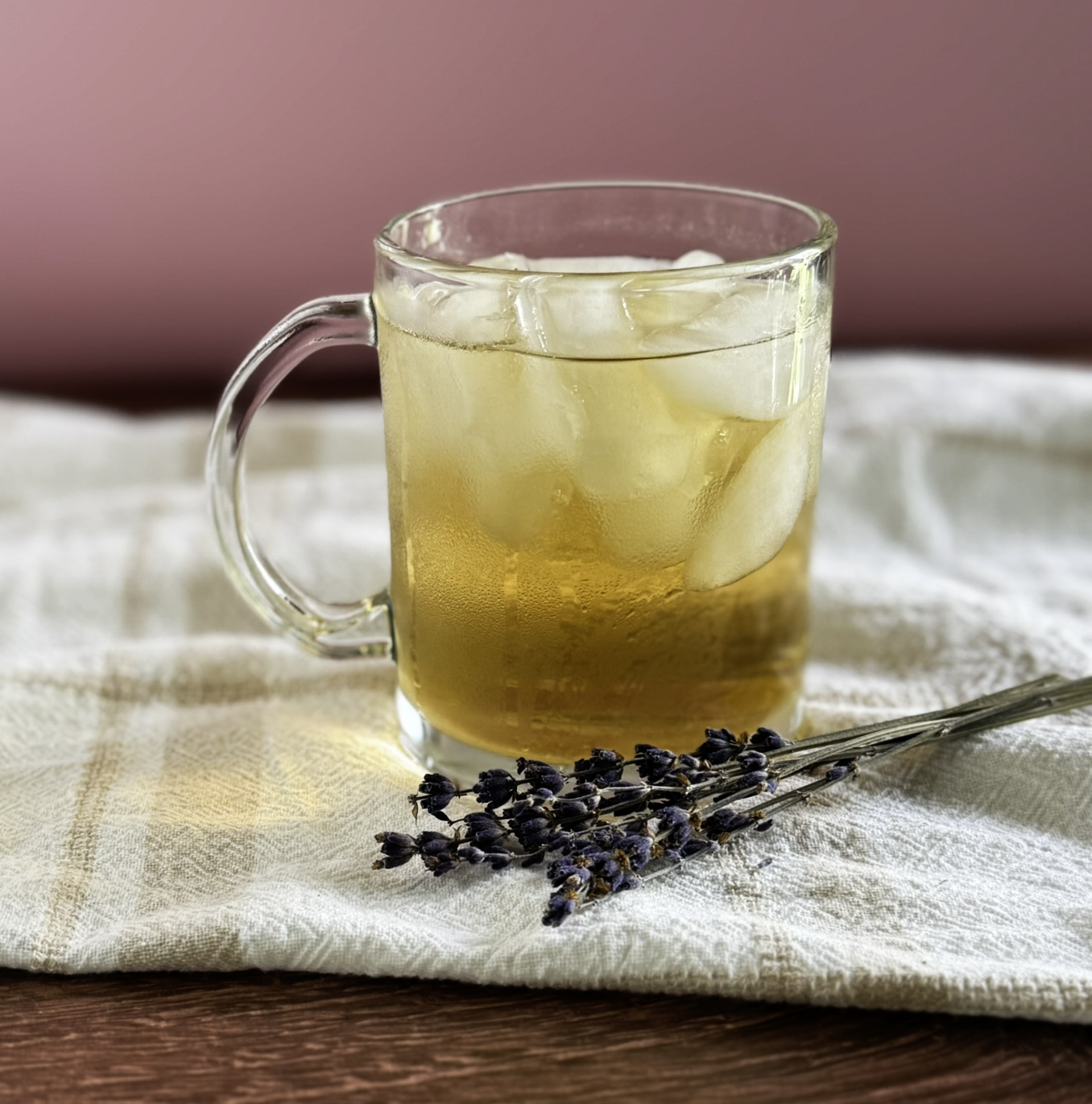
I’ll be honest, I didn’t think this would work out as an iced tea. I was happy to be surprised! It makes a very refreshing and calming drink without the lavender being too overpowering. However, if you find that it’s too intense brewing, just dilute it with more water.
How to make it: Steep 6 - 8 grams (about 3 to 4 tablespoons) per quart of boiling water for at least 5 minutes. Pour over ice and enjoy!
Phoenix Oolong
If you want something with a bit more oomph, I highly recommend this dark oolong as a cold brew. It has a beautiful mineral and smoke aroma with enough astringency to give it the briskness usually found in black iced tea.
How to make it: Steep 8 grams of tea (about 1/4 cup) per quart of filtered water and chill overnight. I haven’t yet tested how many infusions you can get with the same leaves, but I’d be shocked if you couldn’t get at least two.