
Does Tea Have Caffeine? What Actually Affects the Amount
Credit: Pietro Karras
Does tea have caffeine? It’s one of the questions I get asked most often.
Short answer: Yes—most tea contains caffeine, typically between 20–60 mg per cup, though the exact amount varies widely depending on the tea and how it’s brewed.
But how much caffeine ends up in your cup depends on more than just the type of tea. In fact, it’s one of the most misunderstood aspects of tea, and a common source of confusion for people trying to manage their intake.
This post breaks down the factors that affect caffeine in tea, what matters (and what doesn’t), and how to choose something that works for you.
All “True” Tea Contains Caffeine
Any tea made from the leaves of the Camellia sinensis plant naturally contains caffeine.
This includes:
Black tea
Green tea
White tea
Oolong tea
The amount can vary, but caffeine is always present unless the tea has been intentionally decaffeinated.
Herbal teas (also known as tisanes) are different. These are infusions made from other plants—like chamomile, peppermint, or rooibos—and many are naturally caffeine-free.
However, not all herbal blends are caffeine-free. Some include ingredients like cocoa shells or yerba mate, so it’s always worth checking the ingredient list if you’re trying to avoid caffeine.
What Actually Affects Caffeine in Tea
There’s no single number for caffeine in tea because it’s influenced by several variables:
1. The plant and how it’s grown
Credit: Timothy Newman (@newmanphotog)
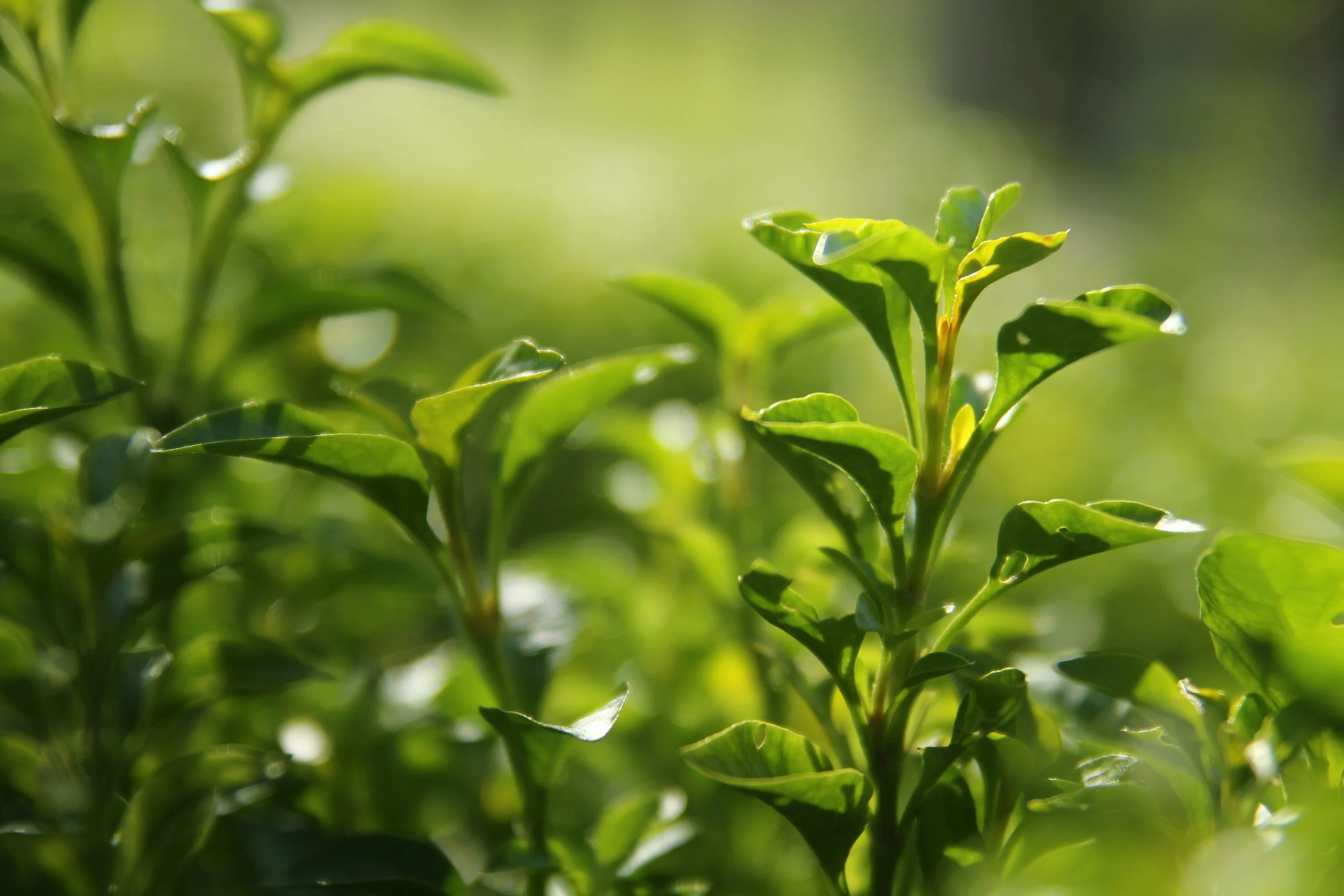
Different tea cultivars naturally contain different levels of caffeine due to genetic variation. Growing conditions—like altitude, shade, and harvest timing—also play a role.
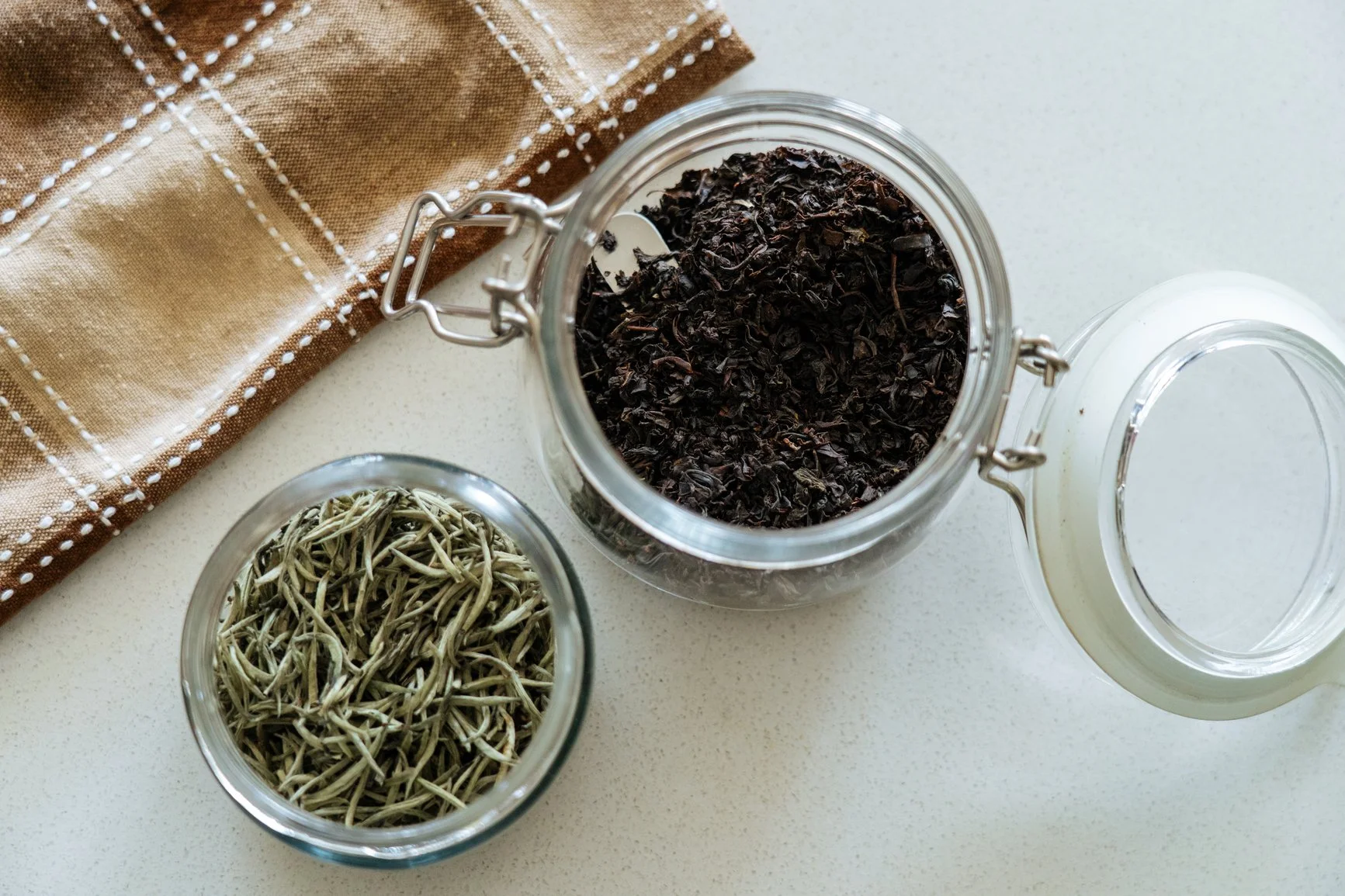
Younger leaves and buds tend to contain more caffeine than older leaves. For example, a cup of Silver Needles (made from only the first spring buds) would tend to have more caffeine than a cup of White Peony, which is made using older leaves and buds from the same exact plant.
2. How the tea is processed
Processing (green vs black vs oolong) changes flavor and aroma, but it doesn’t reliably determine caffeine levels. This is why color isn’t a good indicator.
However, there are processing methods that result in lower caffeine levels. These include roasting the leaves after they’re dried (as in hojicha) or using only the stems—rather than the leaves (as in kukicha).
3. Leaf size and shape (important and often overlooked)
This is one of the more practical factors.
Smaller leaf particles—like those used in many tea bags or broken-leaf blends—have more surface area exposed to water during brewing, which allows caffeine to be extracted more quickly.
Larger, whole leaves tend to extract more slowly under typical brewing conditions.
For example:
A whole-leaf black tea like Peach Orchard (one of my favorites) or Nepali Gold may extract more slowly. So even though both are black teas, they could end up with lower caffeine levels in the cup than a green tea made from smaller leaf particles (like a sencha).
A more broken-leaf blend like Hoboken Breakfast can produce a stronger, more caffeinated cup under the same brewing conditions.
4. How you brew it
Brewing method has a direct impact on how much caffeine ends up in your cup.
Hot water extracts caffeine more efficiently than cooler water.
Longer steeping times generally increase caffeine extraction.
Using more tea leaves increases total caffeine.
Cold brewing extracts caffeine more slowly and generally results in a lower overall level compared to hot brewing. That’s why labels indicating a caffeine level for a given tea can be misleading.
What Affects Caffeine in Tea (Quick Summary)
The type of tea plant and how it’s grown
The age of the leaves (buds vs mature leaves)
Leaf size and shape (whole leaf vs broken)
Brewing method (time, temperature, amount)
What About Matcha?
Matcha is a type of green tea, but it’s prepared differently from most other teas.
Instead of steeping the leaves and discarding them, matcha is made from finely ground tea leaves that are whisked directly into water. That means you’re consuming the entire leaf, not just an infusion.
Because of this, a serving of matcha will typically contain more caffeine than a standard cup of brewed green tea. This is one reason matcha is often described as feeling more energizing than other green teas—though the exact amount still depends on how much matcha you use and how it’s prepared.
Tea Color Doesn’t Tell You Much
Credit: VISUALSPECTRUM
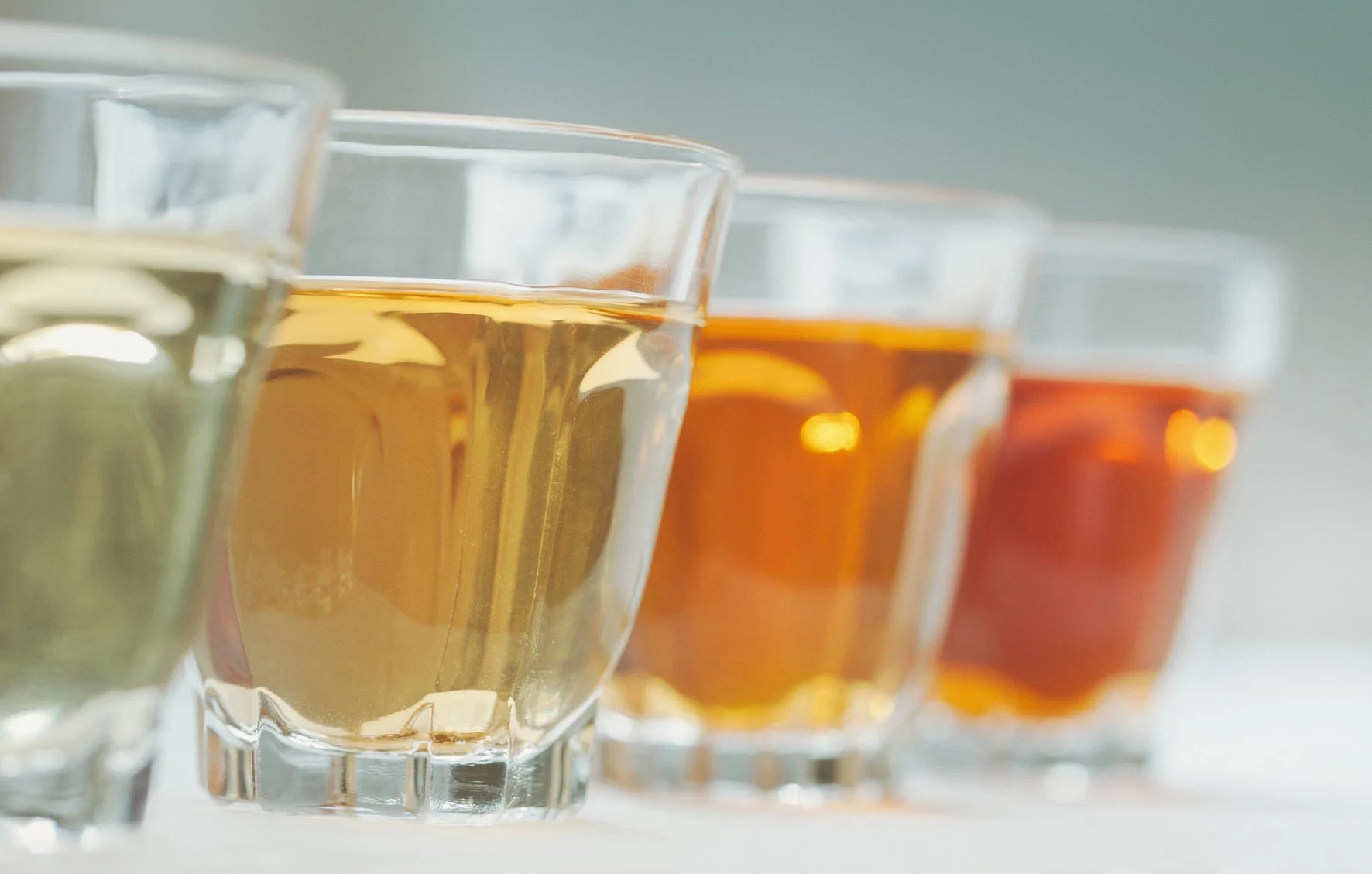
It’s common to assume that darker tea means more caffeine, but this isn’t a reliable rule. The color of tea is determined by how it’s processed—not how much caffeine it contains.
In fact, although some research does report higher levels of caffeine in black tea, there are just as many that find no difference at all, or even higher levels in green tea (see this review article for examples).
That means:
Some green teas can have as much caffeine as black tea
Some white teas (especially those made from buds) can be relatively high in caffeine
There’s no reliable way to tell how much caffeine will end up in your cup based on what kind of tea it is.
How Tea Compares to Coffee
Tea does contain caffeine—but generally less than coffee.
As a rough guide:
Tea: ~20–60 mg per cup
Coffee: ~80–120 mg (or more)
These are broad ranges, but they help explain why tea is often seen as a gentler alternative.
Part of that perception is sometimes attributed to L-theanine, a naturally occurring amino acid found in tea.
L-theanine is well absorbed and can cross into the brain, and some studies suggest it may be associated with relaxation and attention under certain conditions. When combined with caffeine, there is some evidence that it may influence aspects of focus or alertness.
However, it’s important to put this in context.
Much of the research on L-theanine is:
limited in scale
sometimes inconsistent
often based on supplement doses that are higher than what you would get from a typical cup of tea
Because of this, it’s difficult to draw strong conclusions about exactly how L-theanine affects the experience of drinking tea in everyday settings.
In practice, many people do find that tea feels more balanced or less intense than coffee—but that experience likely reflects a combination of factors, including:
lower overall caffeine levels
how tea is brewed and consumed
and individual sensitivity
Does Caffeine From Tea Absorb More Slowly Than Coffee?
You may have heard that caffeine in tea is absorbed more slowly than in coffee.
This isn’t quite accurate.
Caffeine is the same molecule regardless of the source, and it’s absorbed relatively quickly from the digestive system—typically reaching peak levels in the bloodstream within about an hour.
In other words, the body doesn’t distinguish between caffeine from tea and caffeine from coffee at the level of absorption.
What can differ is how that caffeine is experienced. Tea contains L-theanine and other compounds that may influence mood, attention, or perception of stimulation—but the evidence is mixed, and effects vary from person to person.
If you’re interested in digging deeper into this, I recommend this review article.
Potential Benefits of Caffeine
Caffeine is often discussed in terms of limiting intake, but in moderate amounts it also has well-documented effects.
It acts as a central nervous system stimulant, primarily by blocking adenosine receptors in the brain, which can lead to increased alertness and reduced fatigue .
Some research also suggests that caffeine may:
improve attention and reaction time
support certain aspects of cognitive performance
enhance physical endurance and perceived energy
At typical dietary levels, these effects are generally mild but noticeable, and for many people, they’re part of what makes both tea and coffee appealing.
As with most things, the impact depends on the dose and the individual—some people are more sensitive than others.
Naturally Lower-Caffeine Options
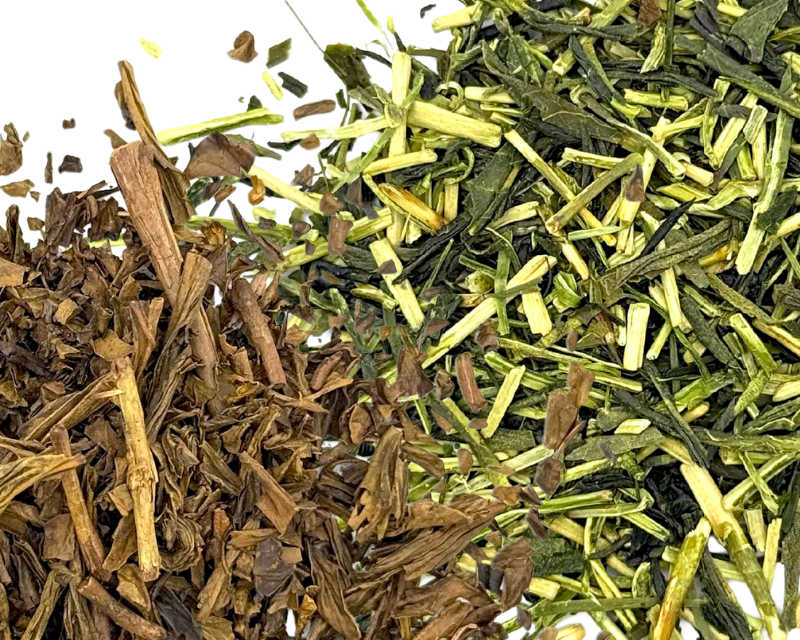
Hojicha (left) and kukicha (right) are types of green tea naturally lower in caffeine due to how they’re made. Credit: B. LaFlamme
If you’re looking to reduce caffeine, there are a few practical approaches:
Choose herbal teas
Many herbal teas are naturally caffeine-free (though it’s still worth checking the ingredients).
Look for lower-caffeine tea styles
Some teas are naturally lower in caffeine, such as:
Kukicha (made from stems rather than leaves)
Hojicha (a roasted green tea)
These can be a good option if you still want something from the tea plant with less caffeine.
Adjust how you brew
Using cooler water or shorter steep times can reduce caffeine extraction.
There’s No Single Answer
Caffeine in tea isn’t fixed—it’s shaped by the plant, the leaf, and how it’s brewed.
If you’re trying to manage your intake, the most useful approach is to:
Pay attention to how different teas feel
Experiment with brewing methods
Choose styles that fit your preferences
A Simple Way to Think About It
Tea does contain caffeine—but usually less than coffee, and often in a form that many people experience as more balanced.
For many people, that’s part of the appeal.
Looking for guidance on getting started with brewing loose leaf tea? Check out our blog post on how to brew loose leaf tea.
–
Sources
Dashwood, R. & Visioli, F. l-theanine: From tea leaf to trending supplement - does the science match the hype for brain health and relaxation? Nutr Res 134, 39-48 (2025). DOI: 10.1016/j.nutres.2024.12.008
Gramza-Michałowska A. Caffeine in tea Camellia sinensis--content, absorption, benefits and risks of consumption. J Nutr Health Aging18:2, 143–9 (2014). DOI: 10.1007/s12603-013-0404-1
Williams, J.L. et al. The Effects of Green Tea Amino Acid L-Theanine Consumption on the Ability to Manage Stress and Anxiety Levels: a Systematic Review. Plant Foods Hum Nutr 75, 12–23 (2020). DOI: 10.1007/s11130-019-00771-5